Myrzan Izimbetov

Myrzan Izimbetov

Product Designer · 6 years · $4M+ monthly revenue impact

I design mobile products that move metrics — from search and payments to growth experiments shipped to production with AI.

London, UK · Open to work

Download CV

Selected Work

Product Designer / Design Engineer at BI Group

Past 2.5 years. 2M+ daily users. Every project shipped to production.

Real estate platform ranked #1 in sales volume across Middle East & CIS. I owned design end-to-end — from user research in sales offices to production-grade prototypes handed off via GitHub.


Search & Filters

+156% page depth · Bounce rate 25% → 16.8% · 679K filter interactions/month

Role: Product Designer

Scope: Search, filters, comparison

Team: PM, engineers, QA

Outcome: 679K+ interactions

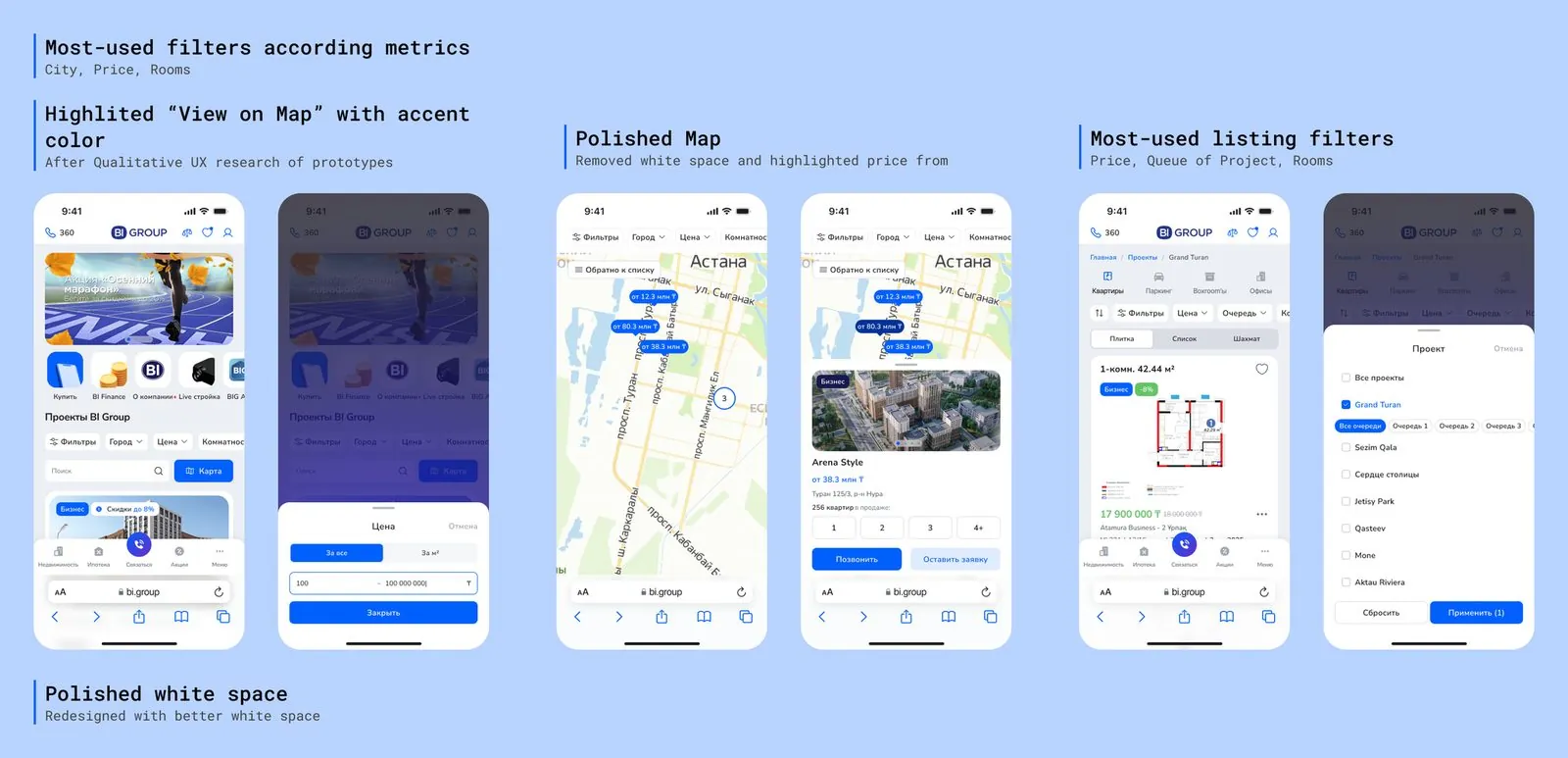
75% of traffic was mobile, but the filter panel was buried under whitespace and unclear affordances. Users were leaving before finding a single listing.

I ran card-sorting sessions with 8 users in a sales office — gift cards, screen recordings, the full guerrilla setup. One finding drove the entire redesign: City, Price, and Rooms covered 87% of all filter use.

I surfaced those three as quick-filter chips above results and pushed everything else one tap deeper. Then restructured listing cards for faster vertical scanning on small screens.

The decision was deliberately reductive — cut options to accelerate decisions, not the other way around.

What I changed

  • Simplified filter architecture around the three most decision-critical criteria
  • Restructured listing cards for faster mobile scanning
  • Moved secondary filters behind progressive disclosure

Case study image

Impact

  • 679K+ filter interactions in the first month
  • Page depth up 156% — users exploring more listings per session
  • Bounce rate dropped from 25% to 16.8%

Key takeaway

The biggest engagement gain came from removing options, not adding them.


Design System · WCAG 2.2 + Dark mode

−83% QA time per task · 50+ semantic tokens · WCAG 2.2 compliant · Dark mode shipped

Role: Product Designer

Scope: Design system, accessibility, dark mode

Team: Designers, frontend engineers, QA

Outcome: 83% reduction in QA time per component

The product had outgrown its components. Inconsistent states, undocumented patterns, and ad hoc colour decisions were causing repeated QA failures and slowing every feature release.

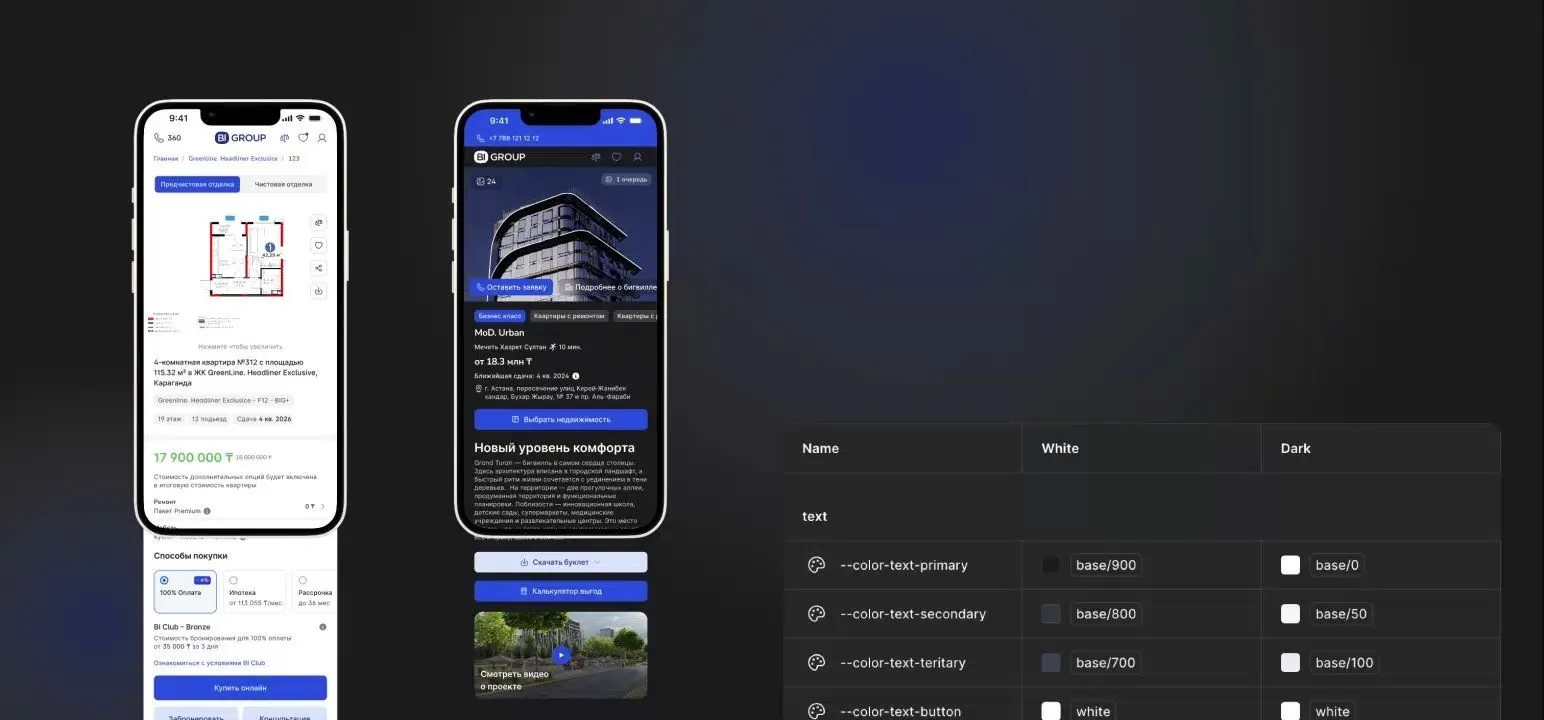
I audited the full component library, identified the 12 highest-friction patterns (ones causing the most QA tickets), and rebuilt them with semantic tokens, documented states, and WCAG 2.2 contrast compliance. Then extended the entire system to support dark mode — not as a skin toggle, but as a first-class token architecture.

I worked directly with frontend engineers to ensure every rebuilt component was easier to implement than the one it replaced. If a component was harder to use correctly, it wasn't done.

What I changed

  • Audited and prioritised components by QA ticket volume
  • Rebuilt 12 high-friction patterns with semantic tokens and documented states
  • Designed a token architecture that supports light/dark as first-class modes
  • Paired with engineers to validate implementation ergonomics

Impact

  • QA time per component down 83%
  • Eliminated an entire category of recurring visual inconsistency bugs
  • Dark mode shipped product-wide without new QA overhead

Key takeaway

A design system earns its value when engineering ships faster with fewer defects — not when the Figma file looks organised.


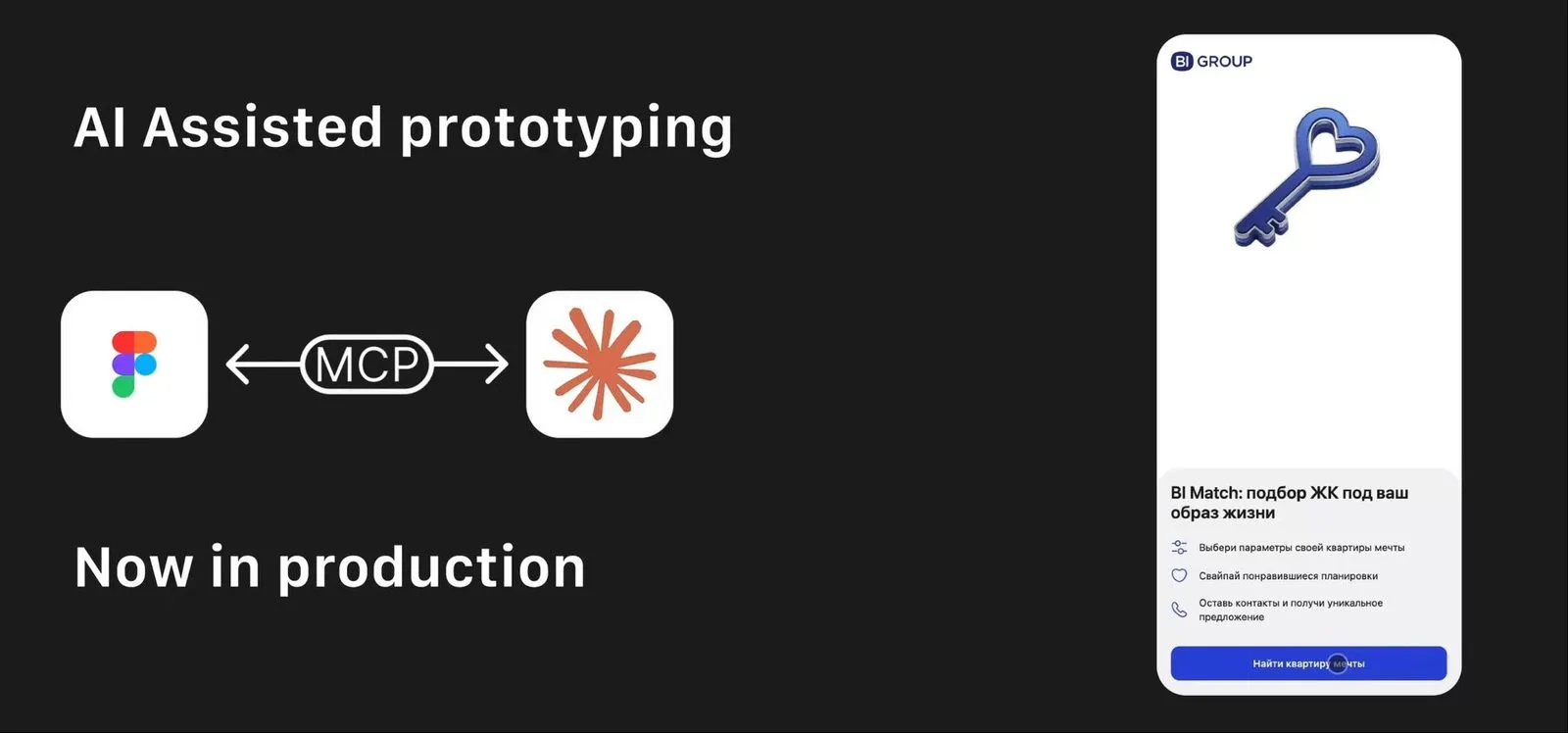
AI Prototyping · BI Tinder · Swipe Discovery

Concept to stakeholder demo in 1 day · Built in production stack · Shipped via GitHub

Role: Product Designer

Scope: Concept, interaction model, prototype

Team: Independent initiative

Outcome: Concept validated and handed off in 1 day

Growth hypothesis: could apartment browsing convert better as a preference-based matching experience instead of a traditional list?

Most designers would spec this out and wait for a sprint slot. I built it — in our actual production stack using Claude Code, not a Figma prototype. Same API, same component library, same data. The prototype was functional enough to hand off via GitHub, not a throwaway demo.

Stakeholders saw a working product the same day the idea surfaced. The concept is now in active development.

The point wasn't that I used AI tooling. The point is that a design hypothesis that would normally block the roadmap for weeks was validated in hours without taking a single engineer off their current work.

What I did

  • Reframed listing browsing as a swipe-based matching interaction
  • Designed the complete interaction model and user flow
  • Built the prototype in the team's real tech stack (not a throwaway)
  • Handed off production-ready code via GitHub

Impact

  • Concept to stakeholder decision in 1 day
  • Zero engineering time consumed from the team's roadmap
  • Prototype now in active development

Key takeaway

AI-assisted prototyping is most valuable when it lets you validate hypotheses at production fidelity without blocking anyone else's work.

More work at BI group->

Product Designer at Beeline

At Beeline, I worked across e-commerce and fintech journeys, including checkout and brokerage flows. My work improved mobile conversion by 17.5% and reduced QA cycles by 30% through a more systematic cross-platform UI foundation.

Product Designer at Petrel AI

For a national industrial client, I redesigned HSE and HR workflows to reduce manual work by 40% and created a modular ERP design foundation to support future integrations.

Case study image

Full details are confidential, but I am happy to walk through the problem, process, and system decisions in conversation.

Product Designer at Technodom

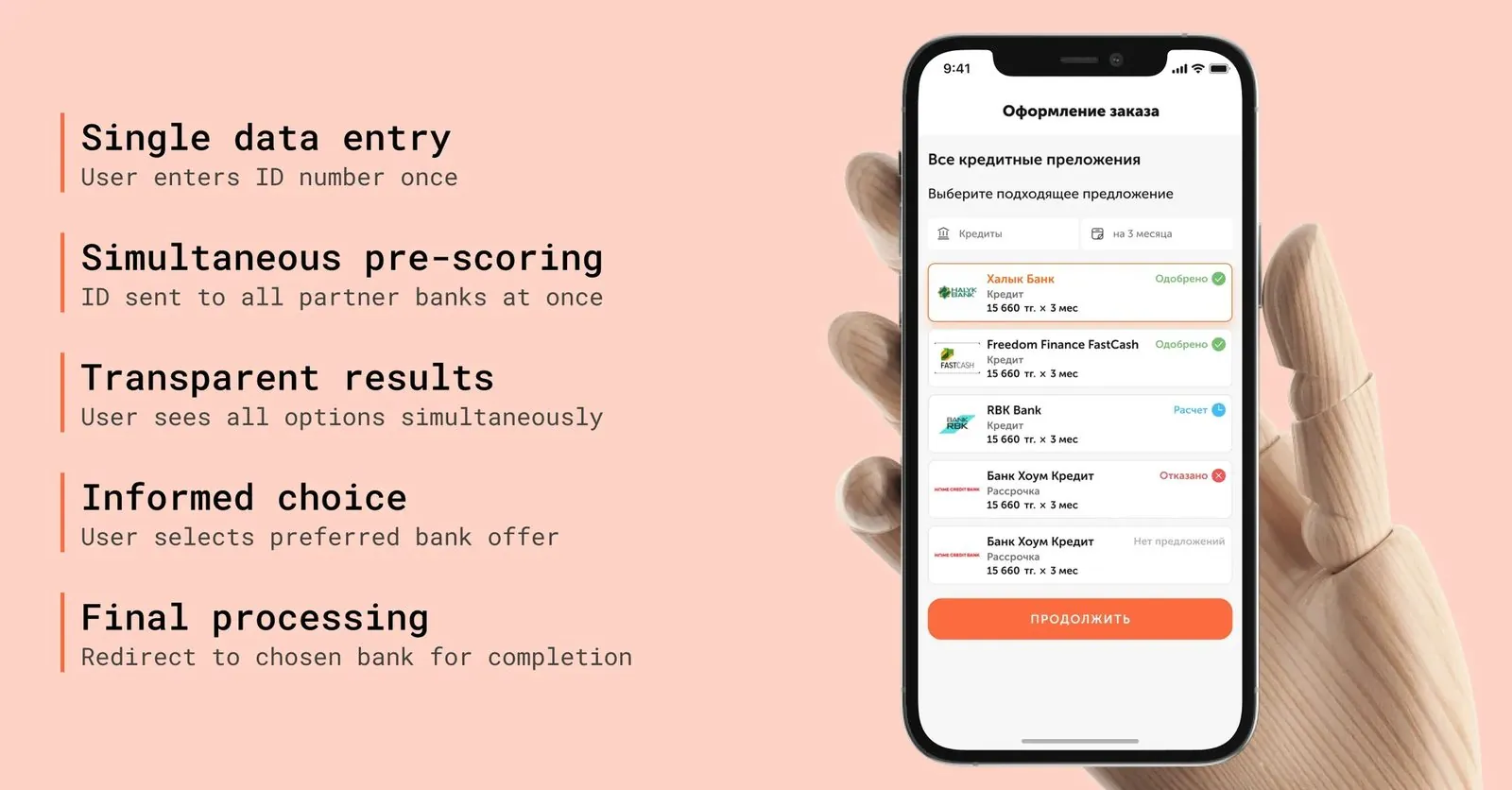
Designed credit and logistics experiences (pre-scoring credit flow, multi-bank comparison, yard management) that drove $4M+ monthly revenue, increased approvals by 35%, and cut warehouse processing time by 45%

Product Designer at Vlife

Designed a service-booking CMS product end-to-end and produced Lottie/After Effects animations alongside icons and promotional assets for the app.

About

I'm a product designer based in London with 6+ years designing high-traffic mobile products.

Most recently at BI Group — a real estate platform with 2M+ daily users — where I ran growth experiments, rebuilt the design system, and shipped AI-assisted prototypes directly to production.

Before that: fintech at Beeline (11M+ subscribers), e-commerce credit flows at Technodom ($4M+ MRR), and enterprise ERP at Petrel AI.

My work combines product thinking, rapid experimentation, and system design across the full path from research to implementation.

I use AI-assisted workflows for prototyping, front-end experimentation, and faster iteration, while keeping product judgment and design decisions firmly human-led.

2022

Product Designer @ Petrel AI (NDA)