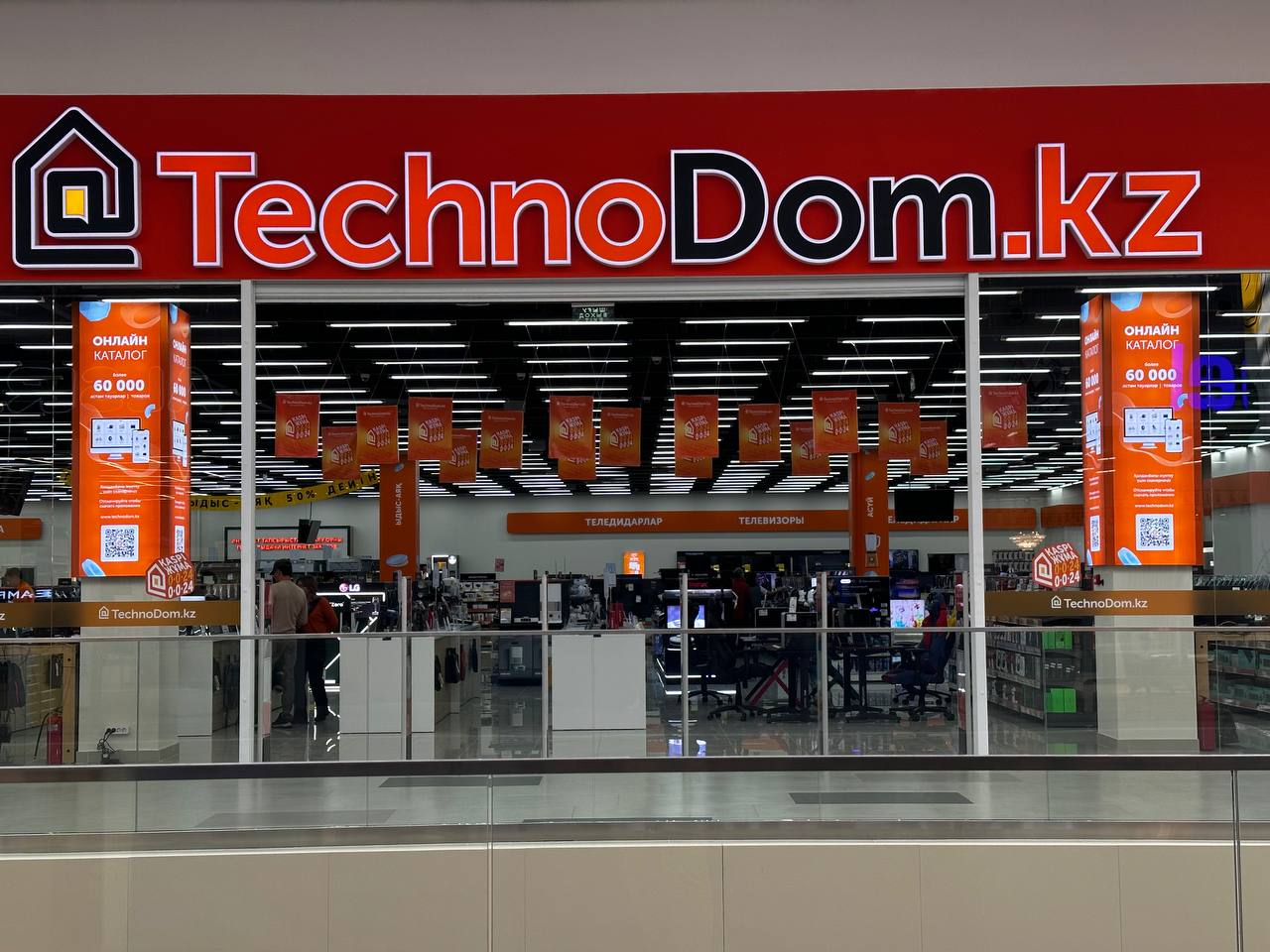
Technodom is one of Kazakhstan’s largest electronics retailers, operating 70+ stores and a major e-commerce platform with integrated credit and installment options. Despite its strong online presence, the credit application process caused major friction.
Problem
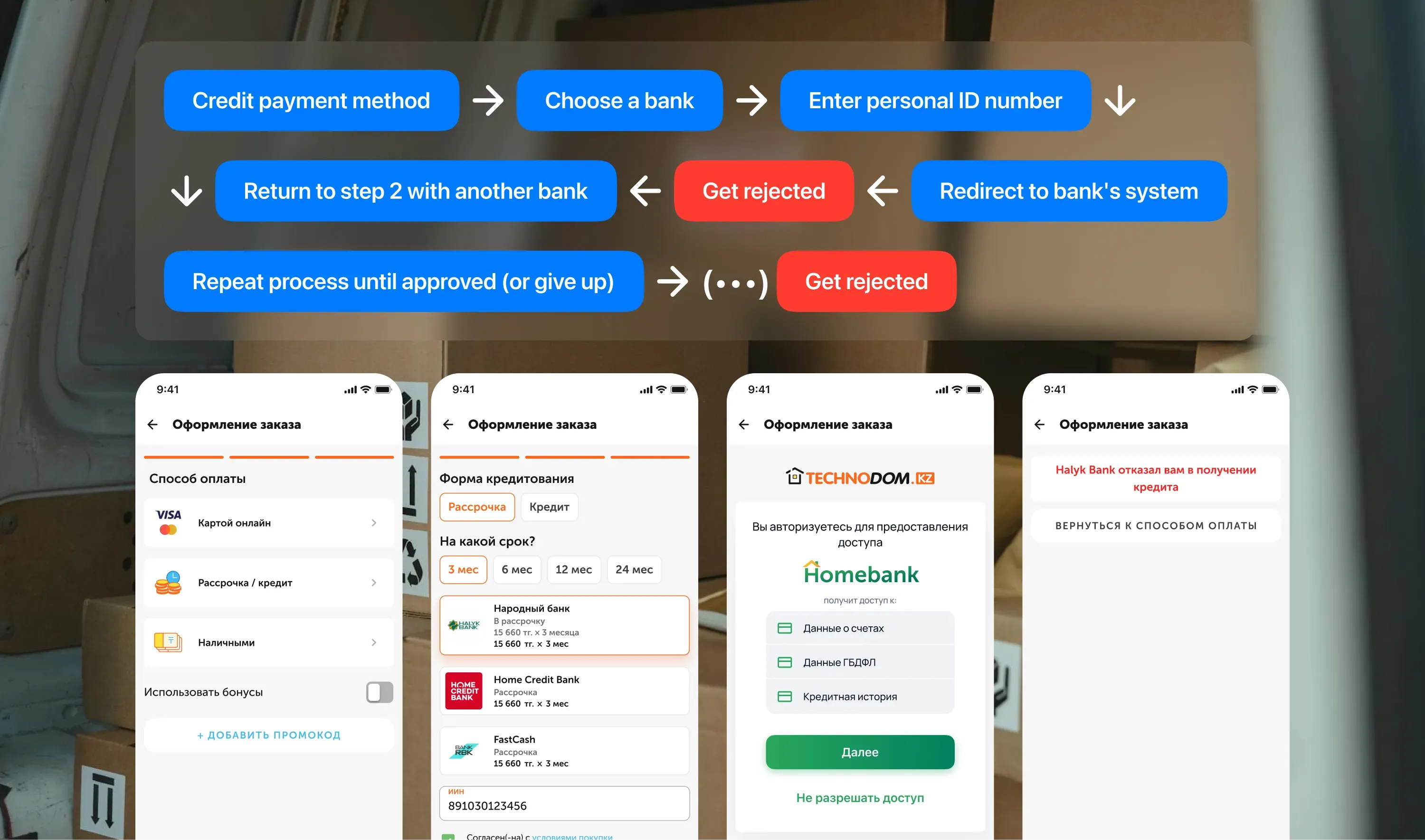
Users applying for credit repeatedly got caught in a rejection loop: selecting a bank, entering their ID number, being redirected, getting rejected, and starting over. Each failed attempt required re-entering data with no indication of which bank might approve them. The result was high abandonment and millions lost in potential credit sales.
Discovery
Through analytics and user interviews, I identified the root issues: repetitive input, lack of transparency, and uncertainty about approval odds. Conversations with banking partners uncovered a crucial opportunity — most banks already supported pre-scoring APIs, allowing us to fetch preliminary approvals simultaneously using only a user’s ID number.
This insight shifted our focus: the goal wasn’t to “make credit look nicer,” but to redesign the system around the user’s real job — securing financing quickly and confidently.
Solution
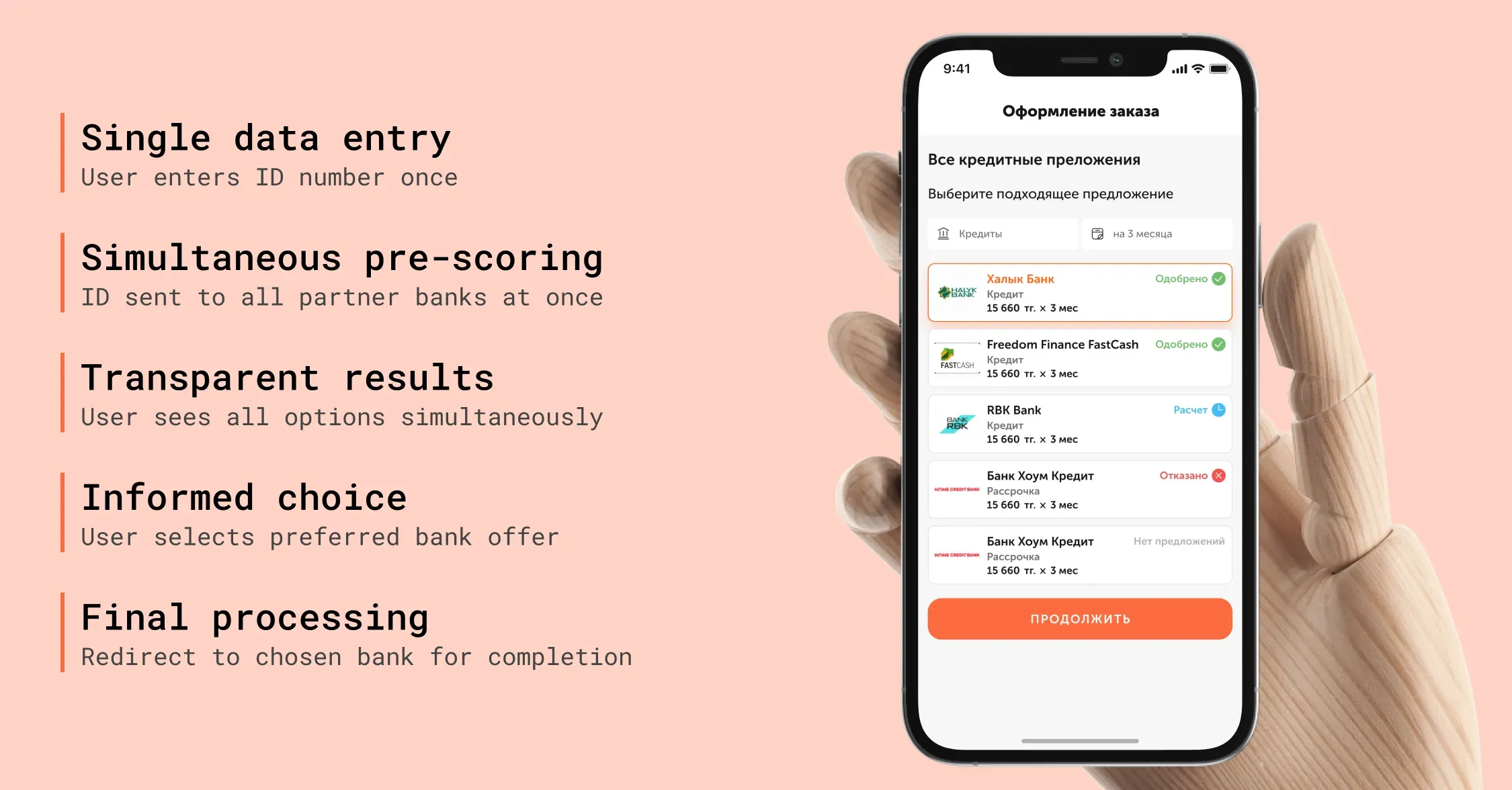
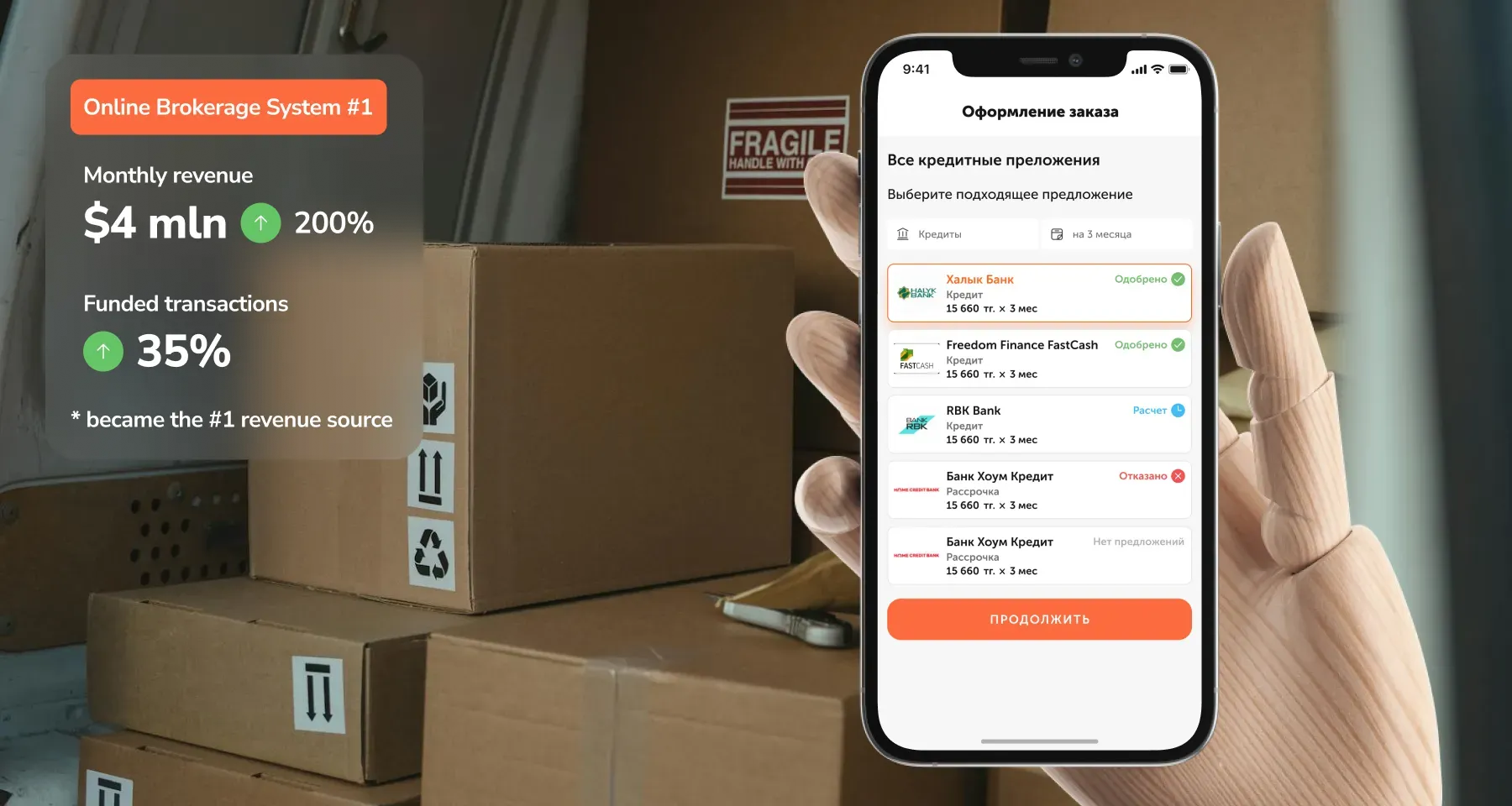
The new flow reversed the logic. Instead of users testing banks one by one, the system now pre-scores them across all partner banks in a single step.
- Users see all eligible offers upfront
- No repeated data entry
- Transparent comparison of rates, limits, and terms
- One-click confirmation after pre-approval
Execution
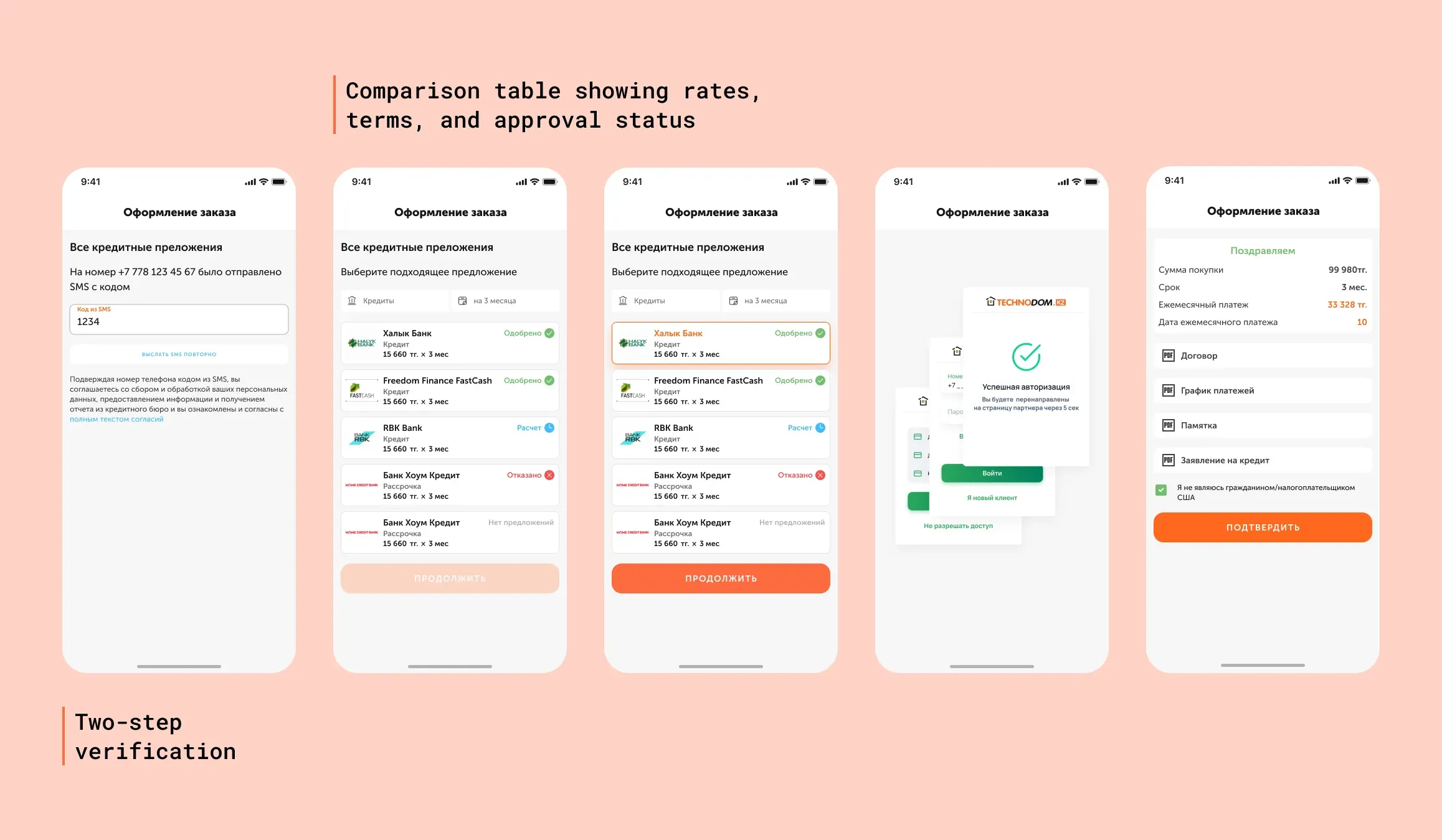
I worked with engineers to integrate multi-bank pre-scoring APIs, design secure two-step verification via SMS, and build fallback flows for exceptional cases. We prioritized accessibility, speed, and data compliance at every stage.
Impact
💰 Business Impact
- +35% increase in credit application conversions
- +$4M additional revenue in the first quarter post-launch
- Online brokerage became Technodom’s #1 revenue stream
- Application time reduced from multiple attempts to a single, transparent session
Learnings
Cross-functional collaboration with banking partners was the unlock. The biggest lesson was that solving user frustration at a system level yields exponential business gains. Next iteration: more A/B testing of comparison layouts and deeper analytics on user decision points.